Tally
Empowering small businesses to process over $120k in revenue
We built an all-in-one fulfillment hub for made-to-order businesses.
Existing inventory tools track complete SKUs, leaving made-to-order businesses to rely on spreadsheets to track raw materials. The closest alternatives are enterprise resource planning (ERP) tools, which are overkill for small businesses.
Role
Product Designer
Timeline
Sep 2024 →
May 2025
Skills
UI/UX, Prototyping, and UX Research
Tools
Figma, Framer
tl;dr
Keeping Tally so you don't have to.
We track material inventory, consolidate invoices, and surface outstanding fulfillment tasks so you can focus on growing your business.
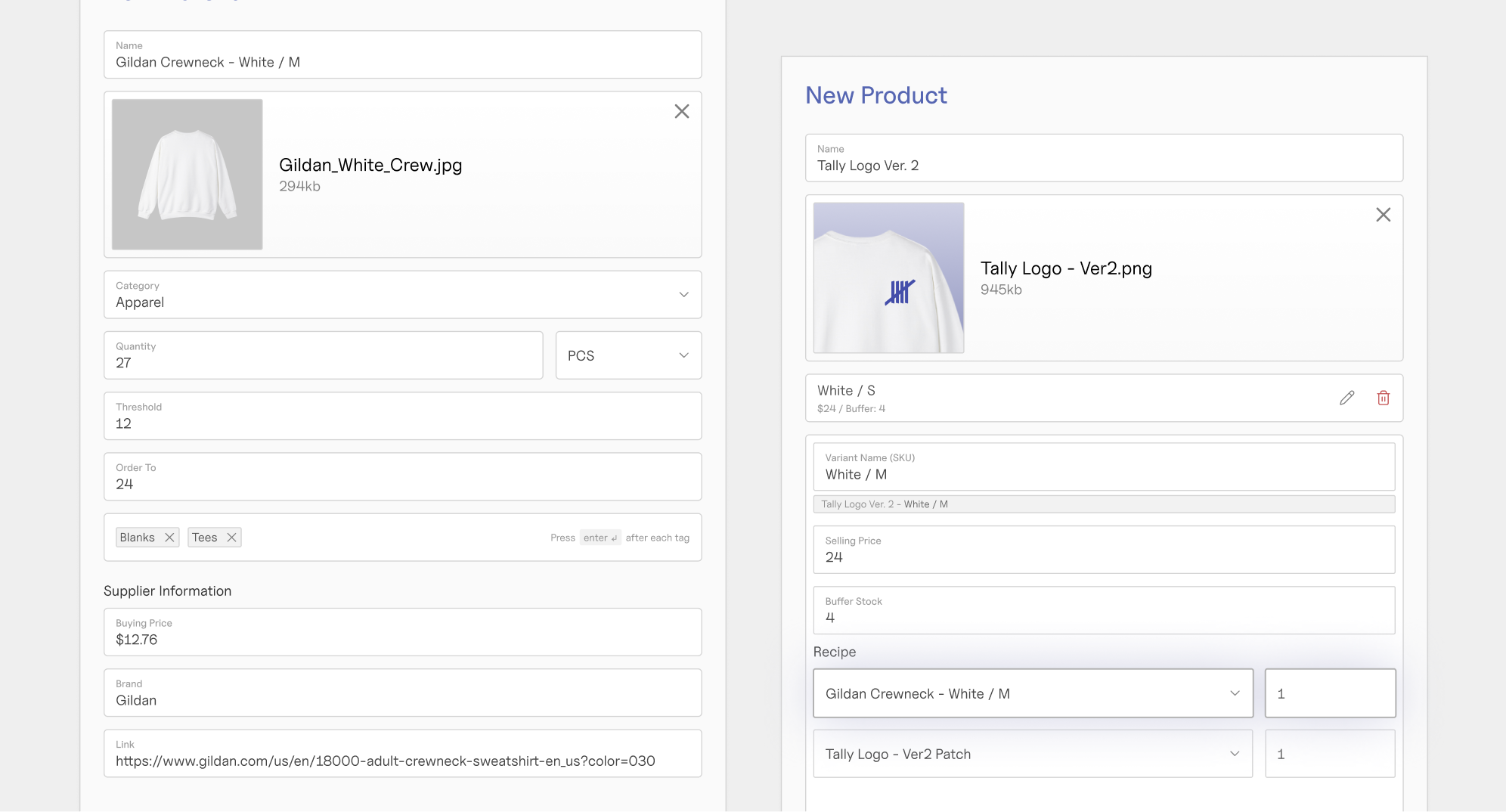
Create Products
Add and link materials—for each sale, inventory adjusts according to the defined recipe.
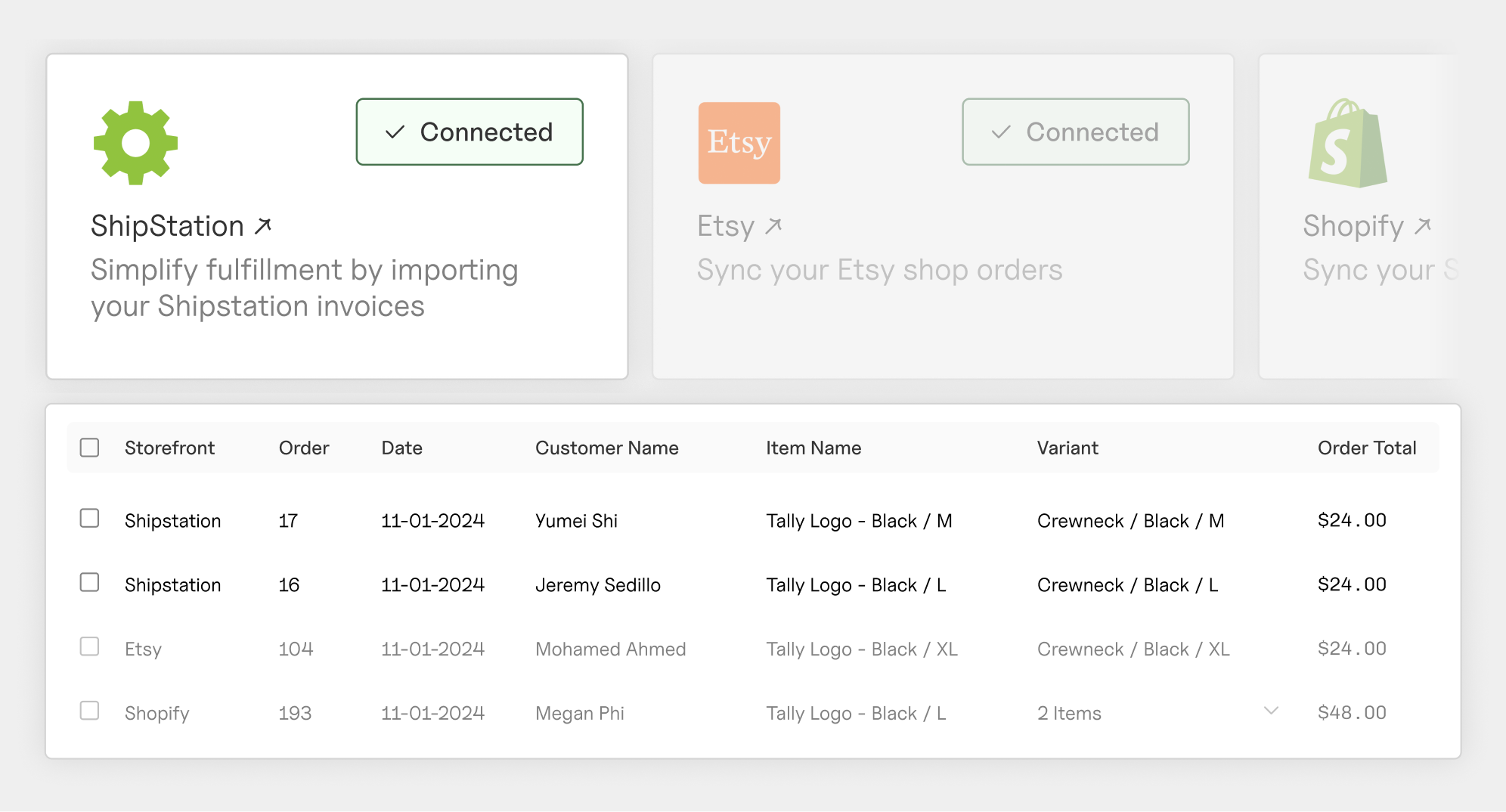
Integrate Storefronts
Connect Shopify, Shipstation, Etsy, and more to consolidate orders for easy fulfillment.
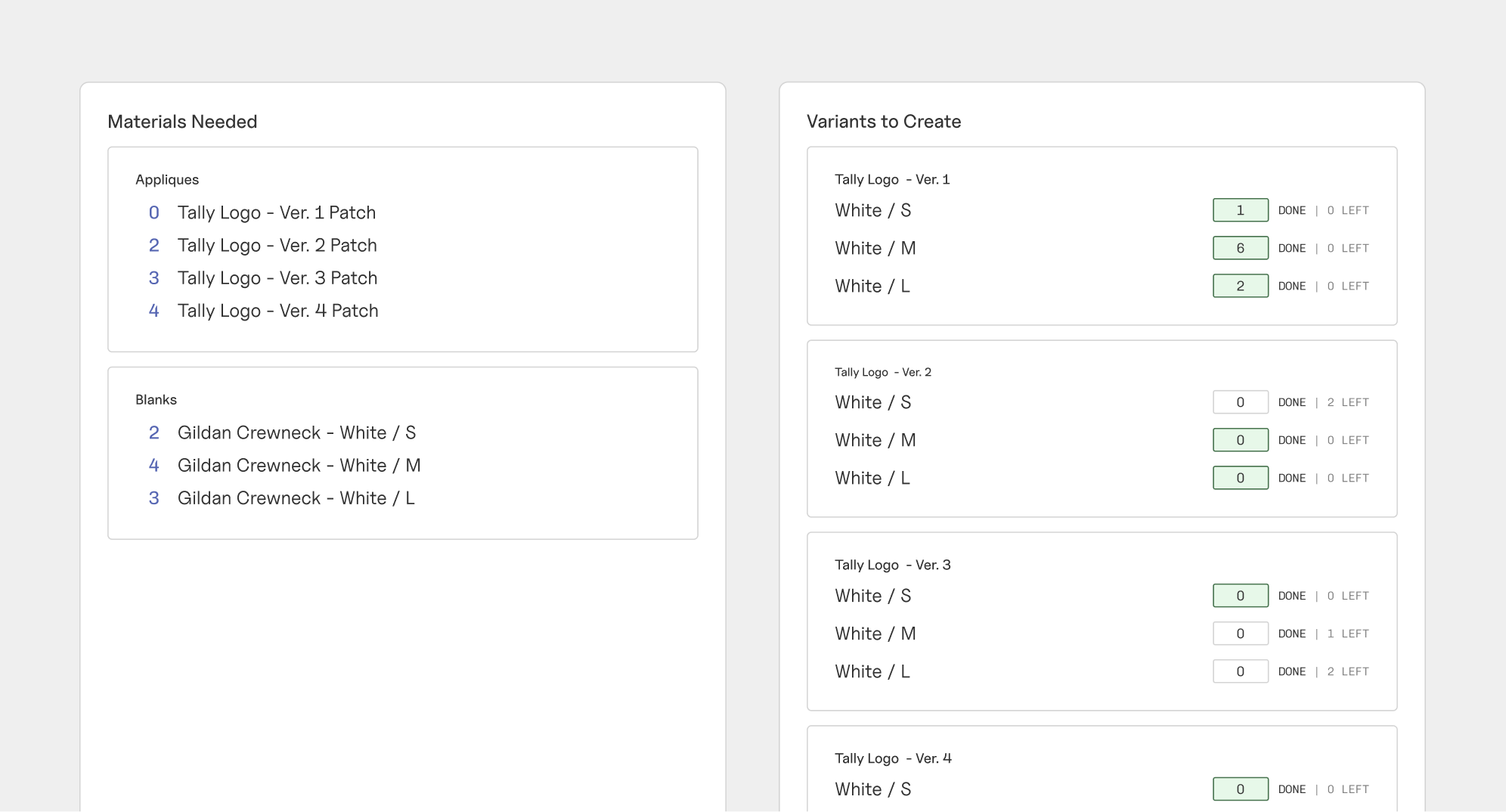
Fulfill With Ease
Generate to-do lists of variants and material quantities needed for outstanding orders.
Impact
Here's what happened when we launched Tally with early users.
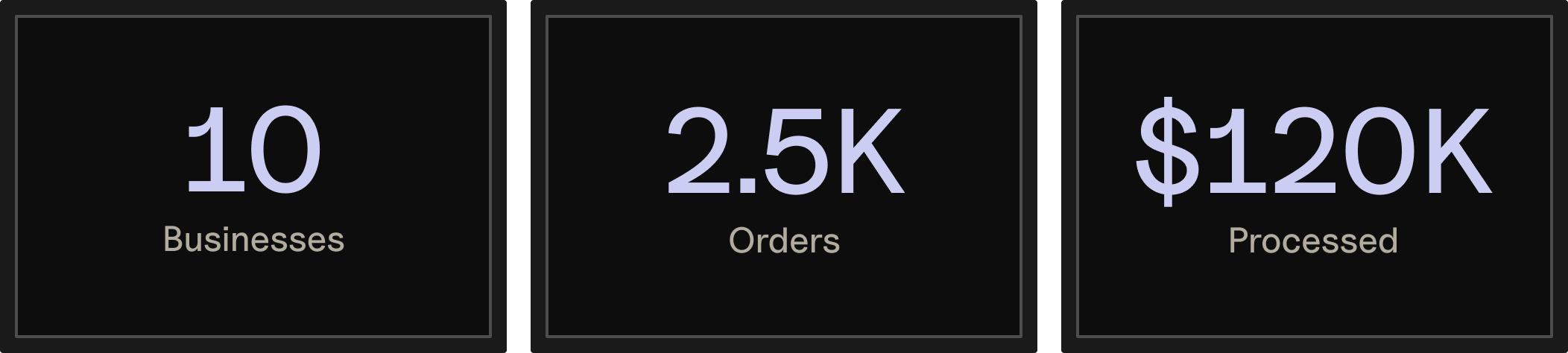
We've since wound down, but our users fulfilled 2,500+ orders, processing over $120k in revenue.
Background
Made-to-order businesses face challenges scaling their operations.
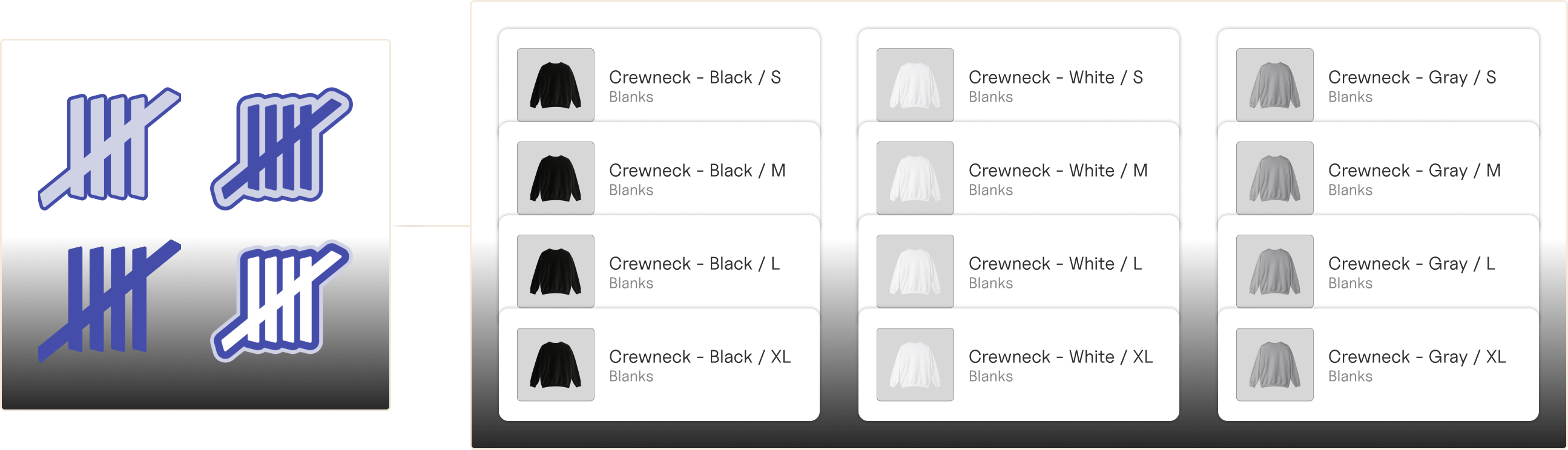
For a "simple" product: 4 designs x 3 colors x 4 sizes = 48 different combinations
Managing inventory for 48 SKUs means tracking the same materials across many combinations. Think of these combinations as recipes with overlapping ingredients. One new product can introduce a lot of new recipes, making scaling exponentially more complicated.
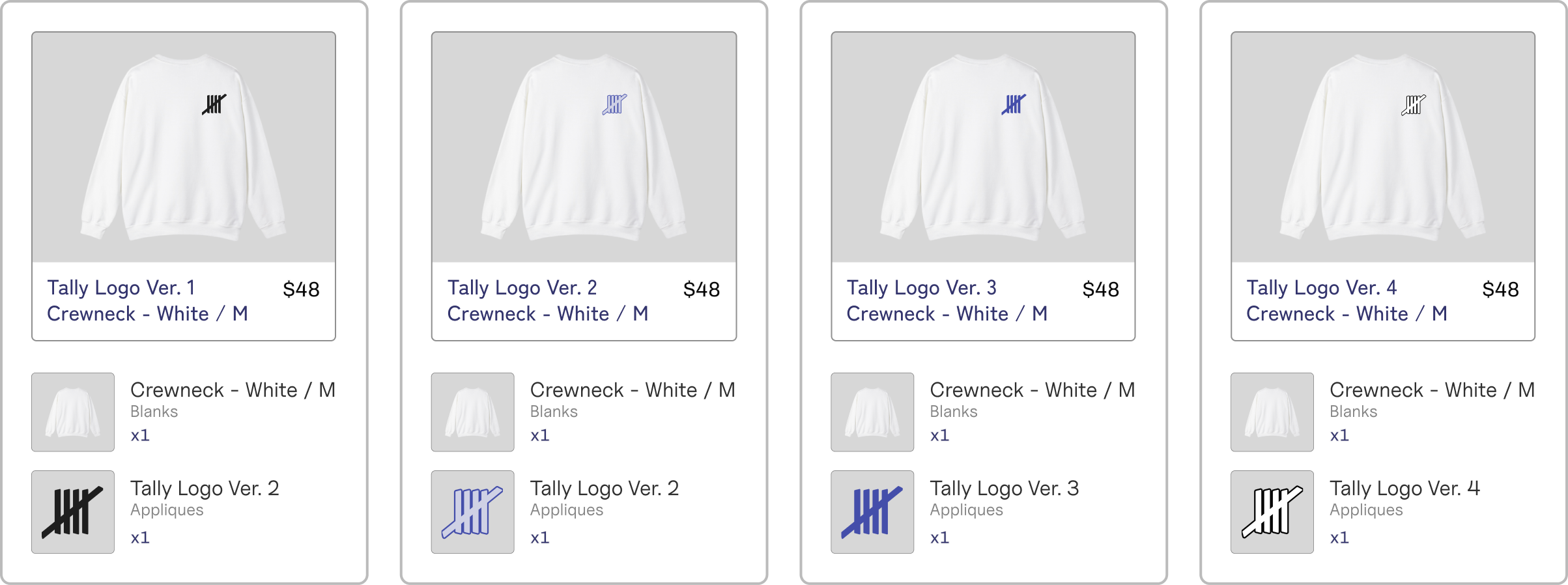
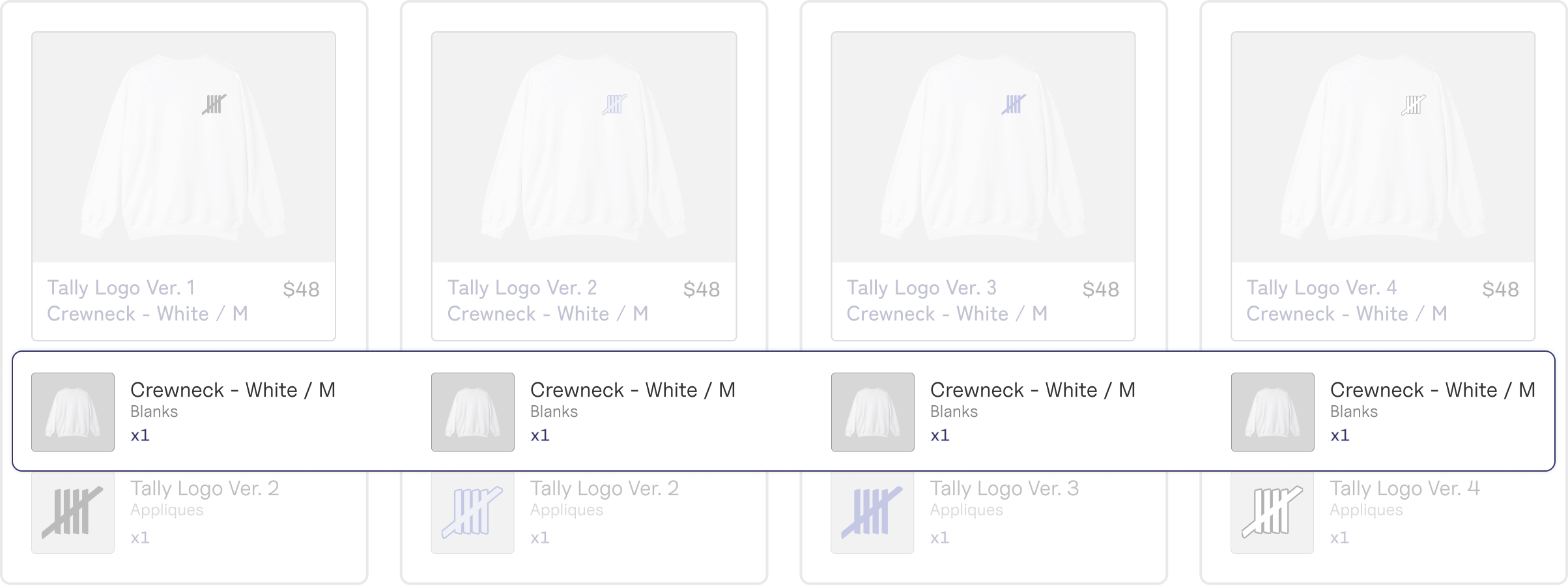
Each variant (e.g. white crewneck, size M) has its own recipe, but recipes share ingredients—so one material affects many SKUs.
As a business selling appliqué apparel, you might sell multiple designs, each with their own array of colors and sizes—that complexity compounds quickly.
The Status Quo
Current inventory solutions overlook made-to-order businesses.
Existing tools track finished items, not materials. We chatted with 10+ businesses from apparel to handmade jewelry. All managed their inventory using spreadsheets.
The few materials-based tools that exist are Shopify apps, only reflecting sales made through Shopify.
There aren't any options for multi-channel businesses to use across Etsy, Squarespace, TikTok Shop, and even in-person sales.
"I'll make a Square sale and forget to update my Shopify... if someone buys off my Shopify storefront later... I have to email to cancel their order."
Inaccurate product and material levels forces businesses to cancel orders or put products on backorder, causing them to miss out on potential sales.
Opportunity
What if we used recipes to automate materials inventory?
We drew from our user interviews to determine high priority needs for an MVP.

Manage inventory by materials
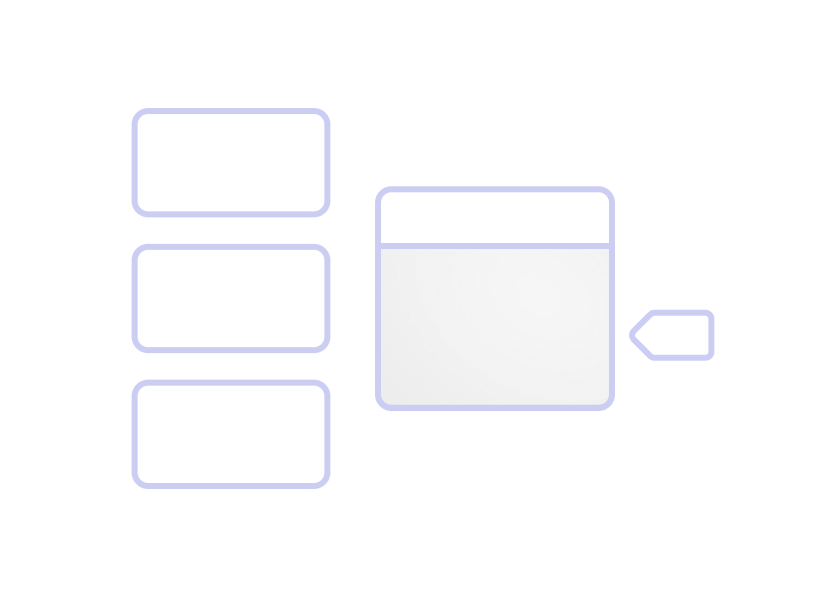
Consolidate invoices across stores

Streamline fulfillment with daily to-dos
We roadmapped a v2 based on signal from early user conversations.

Batch creation: Accommodating finished SKU safety stocks

Supplier price tracking: getting users the best deals on their materials

Metrics dashboard: Giving users at-a-glance insights into their sales
Early Validation
Validating with a chatbot prototype
One of our engineers ran his own made-to-order business on this prototype. His experience directly shaped the product we built next.
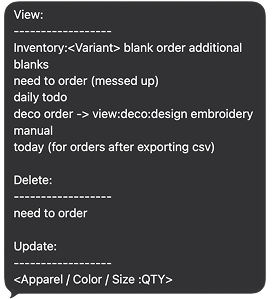
Users could quickly access outstanding order information and manually modify inventory data.
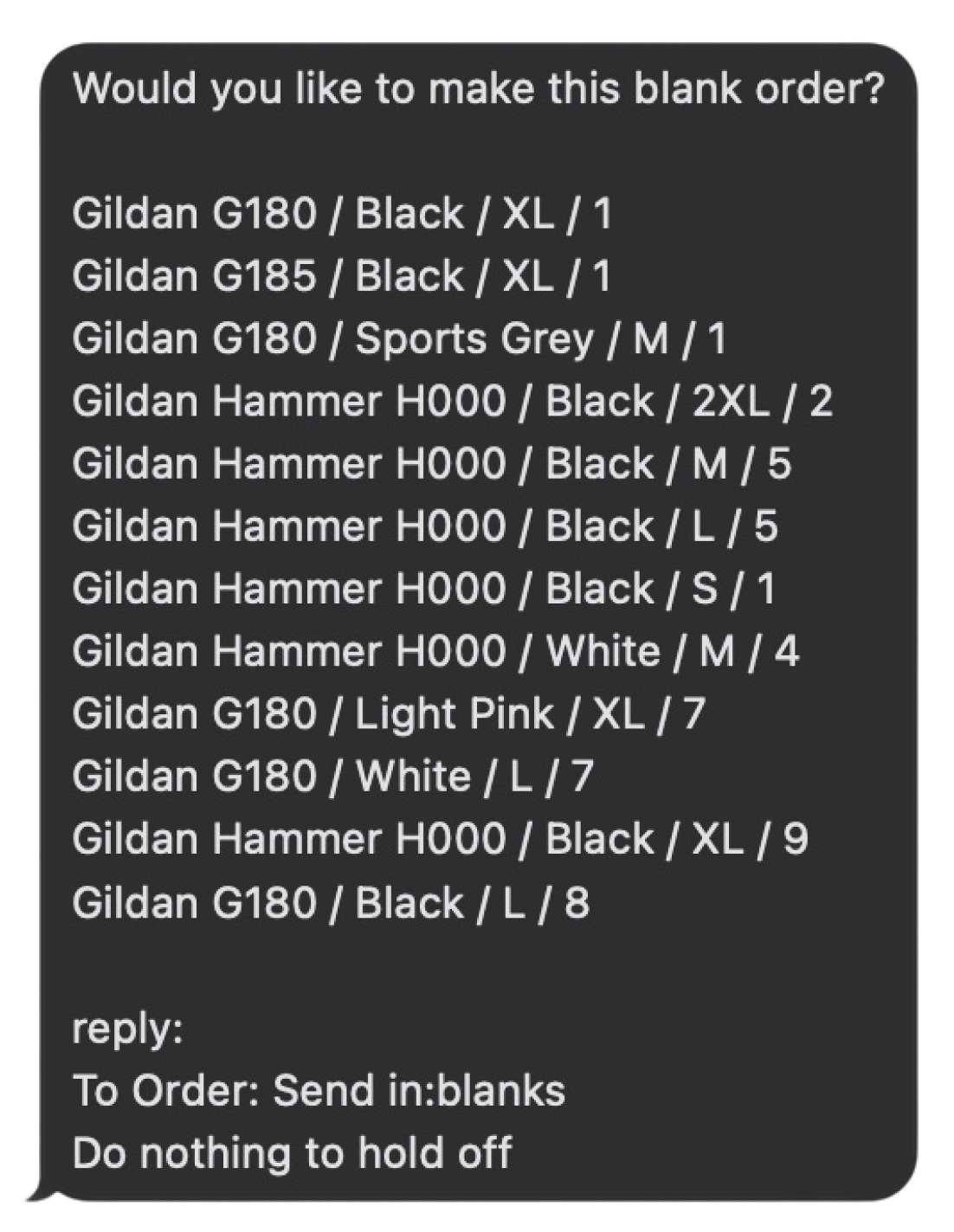
When materials dropped below their safety threshold, they could put in an order to replenish.
Design & Iteration
Incremental Inventory Counter
Inventory values update automatically by default, but users can manually input changes.
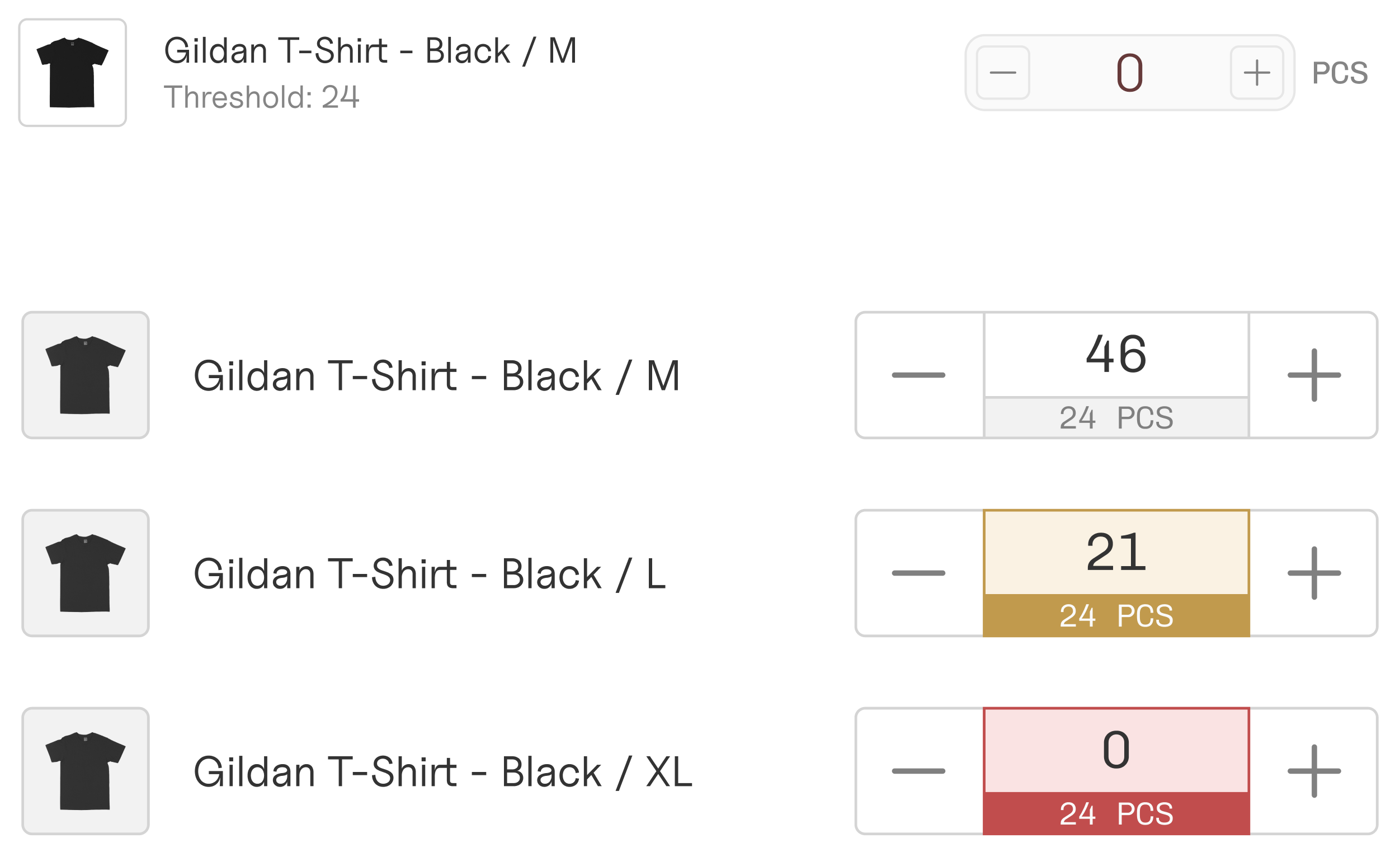
I enlarged the touch targets and placed safety-stock thresholds next to inventory levels for easy scanning. Semantic color coding allows users to identify critical values at a glance.
Modals → Drawers
Modals yielded inconsistent heights and blocked contextual information.
Sweating the Details
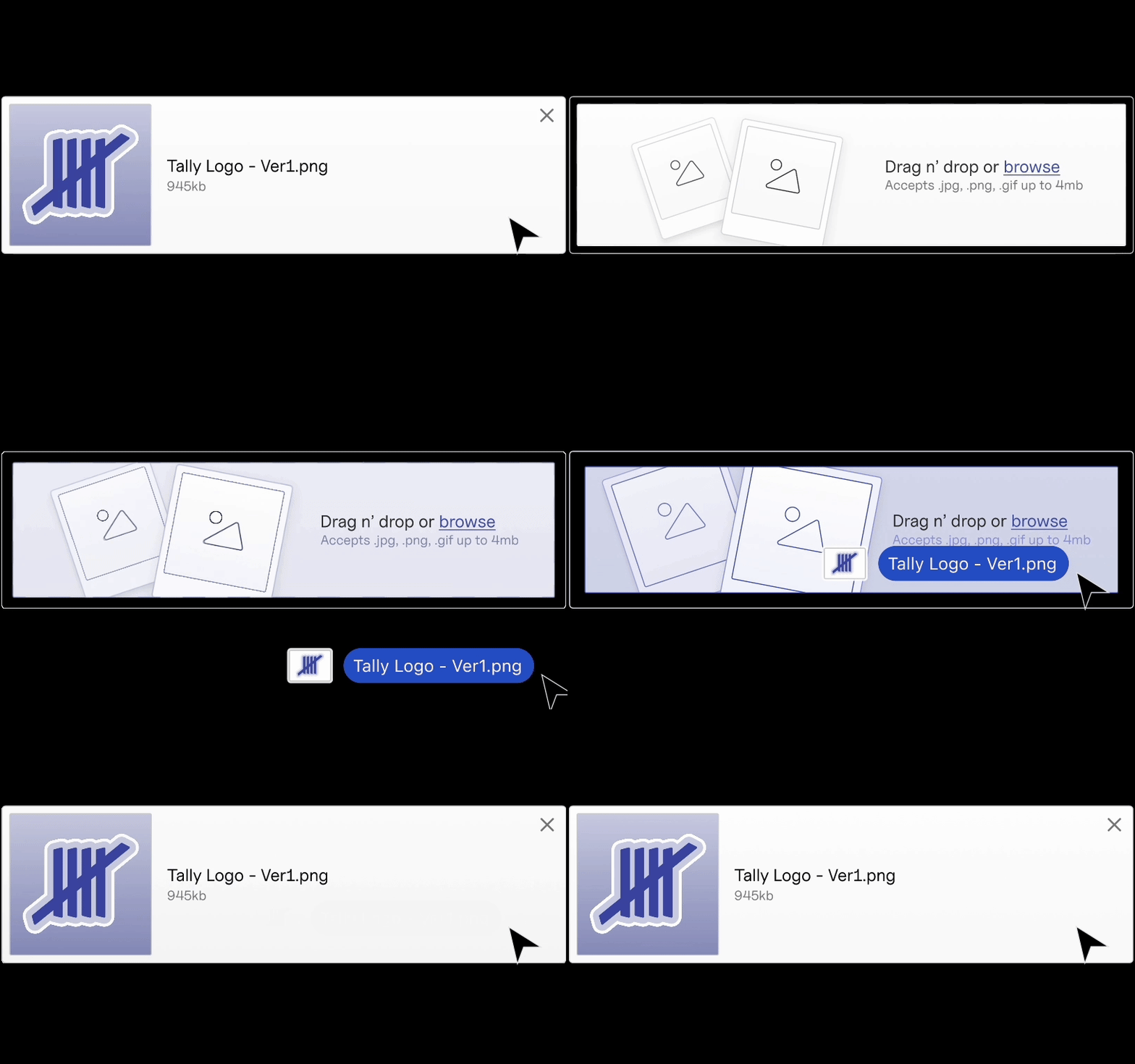
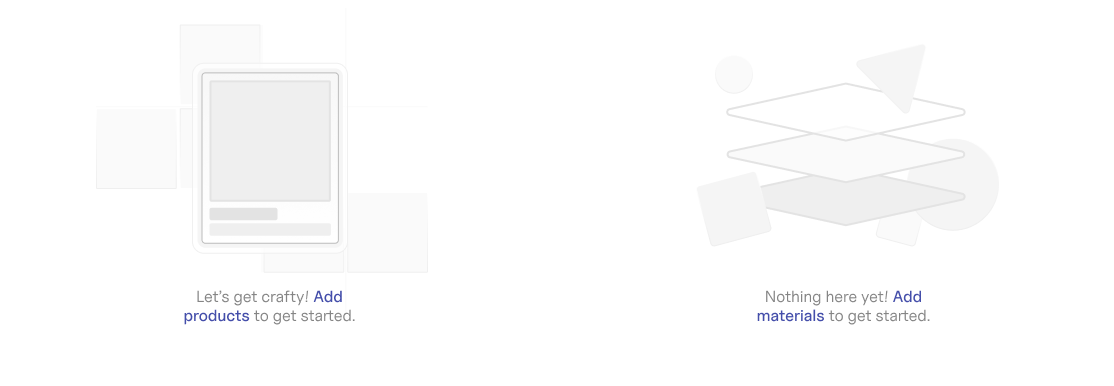
Drag-and-drop interactions and branded empty-state copy pulled Tally together.
Design System
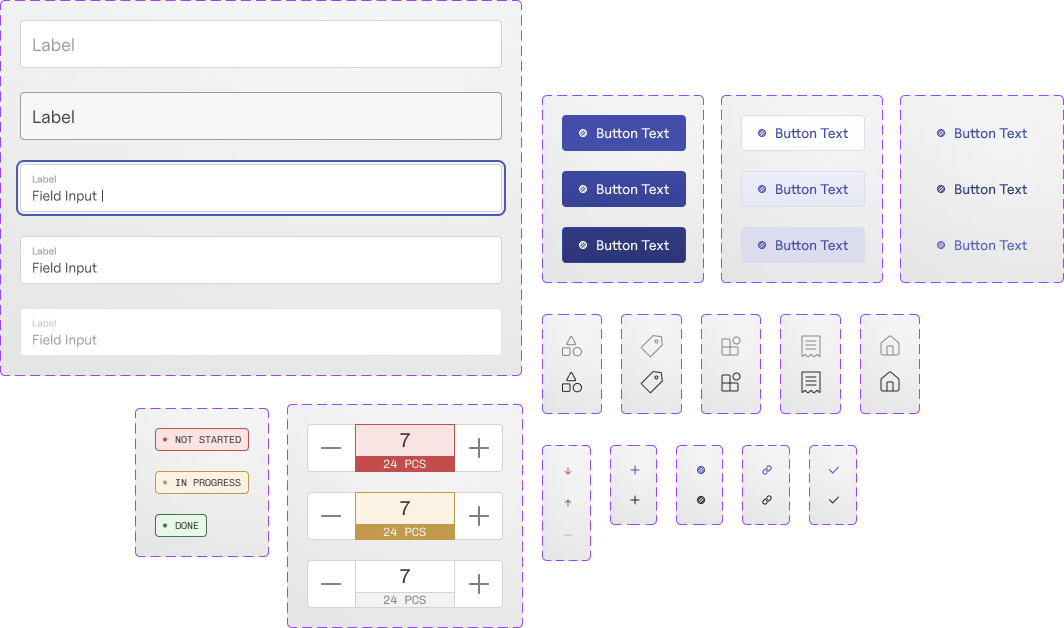
I built a small design library, with call to actions, form inputs, custom illustrated icons, and more. Existing UI libraries like Vercel's shadcn filled in the gaps so we could ship quickly.
Solution
Materials inventory, automated
Add products to your shop
Define recipes for item and color variants by linking materials and their quantities.
Connect your storefronts
Fetch existing invoices from ShipStation, and connect to storefronts to sync new orders.
Watch the numbers move
As orders come in, material quantities update based on each variant recipe.
Cross the finish line with Tally
Track orders and update status as you work through product creation.
Reflection
01
Launch something... anything.
The best way to iterate is to get a product into the hands of users. Getting feedback quickly informed what features to prioritize and what to icebox for the future.
02
Sell a story, not a product.
Beyond the UI, I turned user insights into stories for brand and pitch. Tally pushed me to turn user insights into a clear narrative and to become a better storyteller—and a better communicator.
Shout out to my team — Mo, Jeremy, and Yumei for being incredible engineering and product collaborators along the way.
Super grateful to have had the opportunity to ship this tool and test drive it with some early users :)
